Thursday, 16 April 2026

Pangarchulla Trek Cost: Complete Guide


The Pangarchulla Trek is one of the most thrilling summit treks in Uttarakhand, offering breathtaking views of snow-covered Himalayan peaks and a true high-altitude adventure. Known for its steep final climb and rewarding summit panorama, this trek is perfect for trekkers who want to challenge themselves beyond beginner-level trails.

Pangarchulla Trek


Pangarchulla Peak stands at an altitude of around 4,575 meters (15,010 Ft.) and provides views of famous peaks like Nanda Devi, Hathi Parbat, Chaukhamba, and Kamet on a clear day.

This guide covers everything you need to know about the Pangarchulla trek cost, itinerary, distance, best time, and overall experience.

About Pangarchulla Trek

The trek starts from the beautiful village of Auli, near Joshimath in Uttarakhand. It passes through oak and rhododendron forests, open meadows, and snowfields before reaching the Pangarchulla summit. The final ascent is steep and physically demanding, making it suitable for trekkers with prior high-altitude experience.

The Pangarchulla trek is especially popular in winter and spring when the trail is covered in snow, turning it into a proper snow trek.

Pangarchulla Trek Itinerary (Day-wise)

Pangarchulla Trek Distance

Day 1: Rishikesh to Joshimath (Drive)

The journey begins with a scenic drive from Rishikesh to Joshimath via Devprayag and Chamoli. Joshimath serves as the base town for the trek.

Day 2: Joshimath to Dhak – Trek to Gulling

From Joshimath, you drive to Dhak village and begin your trek to Gulling campsite. The trail passes through forests and mountain villages, offering beautiful views of surrounding peaks.

Day 3: Gulling to Khullara

This day involves trekking deeper into the forest zone towards Khullara, a high-altitude campsite surrounded by snow-covered slopes in winter and spring.

Day 4: Khullara to Pangarchulla Summit – Back to Khullara

Summit day starts early with a steep climb to Pangarchulla Peak. After reaching the summit and enjoying panoramic Himalayan views, you descend back to Khullara campsite.

Day 5: Khullara to Dhak – Drive to Joshimath

You trek back down to Dhak and drive to Joshimath for the night.

Day 6: Joshimath to Rishikesh

Return drive to Rishikesh marks the end of the Pangarchulla trek.

Pangarchulla Trek Distance

The total trekking distance of the Pangarchulla trek is approximately 28–30 km, depending on the route and campsites used.
Daily walking distance ranges from 4 km to 8 km, making it manageable but physically demanding due to altitude and snow conditions.

Pangarchulla Trek Best Time

The best time to do the Pangarchulla trek is from:

  • March to April: Snow-covered trail with clear skies

  • November to early December: Early winter snow trek

  • Late January to February: Full snow conditions for experienced trekkers

Summer months are avoided as the trail becomes grassy and loses its snow-trek charm.

Pangarchulla Trek Cost

The Pangarchulla trek cost depends on the trekking company, season, and services included.

On average:

  • Trek cost ranges between ₹9,500 to ₹14,000

  • The cost usually includes:

    • Accommodation (tents/guesthouses)

    • All meals during the trek

    • Certified trek leader and support staff

    • Trek permits and forest fees

    • Safety equipment and medical kit

Exclusions generally include:

  • Travel to and from Rishikesh

  • Personal expenses

  • Porter or mule charges (if required)

Pangarchulla Trek Cost

Difficulty Level & Fitness

The Pangarchulla trek is rated moderate to difficult, mainly due to:

  • Steep summit climb

  • High altitude

  • Snow walking in winter

  • Long trekking hours on summit day

Trekkers should prepare with:

  • Regular cardio (walking, jogging, cycling)

  • Stair climbing practice

  • Leg strength exercises

  • Prior high-altitude trekking experience (recommended)

Why Do the Pangarchulla Trek with Trek The Himalayas?

Choosing a professional trekking organization improves safety and overall experience. Trek The Himalayas provides:

  • Experienced trek leaders trained in high-altitude and snow trekking

  • Well-designed itinerary with acclimatization days

  • Quality camping equipment and hygienic meals

  • Medical support and emergency evacuation planning

  • Eco-friendly trekking practices

  • Strong safety protocols for summit attempts

Their organized approach allows trekkers to focus on the challenge and beauty of the Pangarchulla summit without worrying about logistics.

FAQs

1. What is the total distance of the Pangarchulla trek?
The total trekking distance is around 28–30 km.

2. What is the best time to do the Pangarchulla trek?
The best time is from March to April and November to February, depending on snow conditions.

3. How much does the Pangarchulla trek cost?
The average Pangarchulla trek cost ranges between ₹9,500 to ₹14,000, depending on the trekking company and inclusions.

4. Is the Pangarchulla trek suitable for beginners?
The Pangarchulla trek is better suited for trekkers with basic trekking experience due to its steep summit climb and high altitude.

Tuesday, 14 April 2026

Rupin Pass Trek – Detailed Itinerary, Distance, Cost & Best Time

 The Rupin Pass Trek is one of the most thrilling high-altitude crossover treks in the Indian Himalayas. Starting from the remote villages of Uttarakhand and ending in the lush Sangla Valley of Himachal Pradesh, this trek offers an ever-changing canvas of landscapes. From terraced fields and pine forests to glacial valleys, icy slopes, and towering mountain walls, the journey to Rupin Pass feels like stepping into a new world each day.

Rupin Pass Trek


What truly sets the Rupin Pass trek apart is its natural drama. Massive waterfalls pour down from cliffs, narrow trails wind above deep gorges, and the final climb to the pass involves walking over snowfields with grand Himalayan views all around. It is a trek that tests your endurance while rewarding you with unforgettable scenery.

Rupin Pass Trek Distance, Duration & Difficulty

  1. Rupin Pass trek distance: Approximately 52–55 km
  2. Duration: 7 to 8 days
  3. Maximum altitude: Around 15,250 ft (4,650 m)
  4. Difficulty level: Moderate to Difficult
  5. Trail type: Crossover trek (Uttarakhand to Himachal Pradesh)

The long walking days, steep ascents near the pass, and changing terrain make the Rupin Pass trek itinerary ideal for trekkers who want a step up from beginner-level trails.

Rupin Pass Trek Best Time

The Rupin Pass trek best time depends on the kind of experience you want:

Summer Season (May to June)

This is when the trail still holds snow near the higher camps and the pass. Trekkers experience:

  1. Snow bridges and frozen streams
  2. Challenging snow climbs
  3. Fresh alpine flowers in lower meadows
  4. Pleasant daytime temperatures

Autumn Season (September to October)

Autumn brings clearer skies and stable weather:

  1. Golden meadows and brown-orange forests
  2. Spectacular mountain views
  3. Cold nights but comfortable trekking days
  4. Minimal rainfall

Monsoon months (July–August) are not recommended due to slippery trails and landslide risks, while winter sees the route buried under deep snow.

Detailed Rupin Pass Trek Itinerary

Rupin Pass Trek Itinerary


Day 1: Dehradun to Dhaula (5,100 ft.)

Your journey begins with a scenic drive from Dehradun through Mussoorie, Naitwar, and Mori. The road runs parallel to the Tons River and offers beautiful views of pine forests and remote mountain settlements. Dhaula, the base village of the trek, is surrounded by terraced fields and snow-clad peaks.

Day 2: Dhaula to Sewa (6,300 ft.) – 6 km

The trek starts gently through farmlands and forested trails. You walk along the Rupin River and cross wooden bridges. Sewa village is famous for its ancient temple dedicated to Lord Shivas, and the campsite is set amid peaceful mountain scenery.

Day 3: Sewa to Jhaka (8,700 ft.) – 8 km

The trail becomes steeper today as you climb through thick forests of deodar, pine, and rhododendron. Jhaka village, perched dramatically on a hillside, is known as the “hanging village” because of its vertical terrain. The views of the valley from here are truly breathtaking.

Day 4: Jhaka to Saruwas Thatch (11,100 ft.) – 5 km

Today’s trail enters alpine territory. You pass natural waterfalls and open grassy slopes known as “thatches.” Snow may appear on the trail depending on the season. Saruwas Thatch is a serene campsite surrounded by rocky cliffs and high ridges.

Day 5: Saruwas Thatch to Dhanderas Thatch (12,600 ft.) – 5 km

This is one of the most beautiful days of the Rupin Pass trek itinerary. You walk beside roaring waterfalls, glacial streams, and wide meadows framed by snow peaks. Dhanderas Thatch lies beneath massive mountain walls, making it one of the most photogenic campsites on the trek.

Day 6: Dhanderas Thatch to Rupin Pass (15,250 ft.) and descend to Ronti Gad (13,000 ft.) – 10 km

The most challenging and exciting day of the trek. A steep ascent over snow slopes leads to the top of Rupin Pass. From here, trekkers are rewarded with panoramic views of the Kinnaur Kailash range and surrounding Himalayan peaks.

The descent into Himachal Pradesh is equally adventurous, involving controlled walking over snow and rocky terrain until you reach the campsite at Ronti Gad.

Day 7: Ronti Gad to Sangla (8,800 ft.) – 12 km

A long but scenic descent through forests, past waterfalls and streams, brings you into the beautiful Sangla Valley. This marks the end of the trekking journey. From Sangla, trekkers usually drive to Shimla or Kalpa.


Rupin Pass Trek Cost


Rupin Pass Trek Cost

The Rupin Pass trek cost generally ranges between ₹15,000 to ₹20,000, depending on the trekking organization and inclusions. This typically covers:

  1. Accommodation in tents
  2. All meals during the trek
  3. Professional trek leader and support staff
  4. Safety equipment (microspikes, ropes, first-aid kits)
  5. Transport from Dehradun to Dhaula and from Sangla onward
  6. Costs may vary based on group size, season, and additional services.

Why Do the Rupin Pass Trek with Trek The Himalayas?

Choosing Trek The Himalayas for the Rupin Pass trek ensures a safer and more comfortable experience:

  1. Expert trek leaders: Trained professionals guide you through snow slopes and steep ascents.
  2. Well-structured itinerary: Their Rupin Pass trek itinerary allows for proper acclimatization.
  3. High safety standards: Oxygen cylinders, medical kits, and trained staff ensure emergency readiness.
  4. Quality camping & meals: Hygienic food and durable camping gear enhance comfort at high altitudes.
  5. Strong logistics: Porters and support staff make sure your trek remains smooth and stress-free.

With Trek The Himalayas, trekkers can focus on enjoying the landscape while the team handles navigation, safety, and logistics.

FAQs 

1. What is the total Rupin Pass trek distance?

The total Rupin Pass trek distance is around 52–55 km, covered over 7 to 8 days.

2. Is Rupin Pass trek suitable for beginners?

The trek is suitable for fit beginners who have prior trekking or endurance experience, as it involves long walking hours and a steep climb to the pass.

3. What is the best time to do the Rupin Pass trek?

The Rupin Pass trek best time is from May to June and September to October, offering stable weather and stunning scenery.

4. How much does the Rupin Pass trek cost?

The Rupin Pass trek cost generally falls between ₹15,000 and ₹20,000, depending on the trek operator and services included.

Conclusion

The Rupin Pass trek is a complete Himalayan adventure that blends natural beauty with physical challenge. From quiet villages and dense forests to icy slopes and a dramatic high-altitude pass crossing, every day offers a new surprise. A well-planned Rupin Pass trek itinerary, the right season, and professional guidance from Trek The Himalayas make this journey safe, enriching, and unforgettable.

For trekkers seeking a trail that delivers thrill, diversity, and true mountain adventure, the Rupin Pass trek remains one of the finest choices in the Indian Himalayas.

Tuesday, 10 February 2026

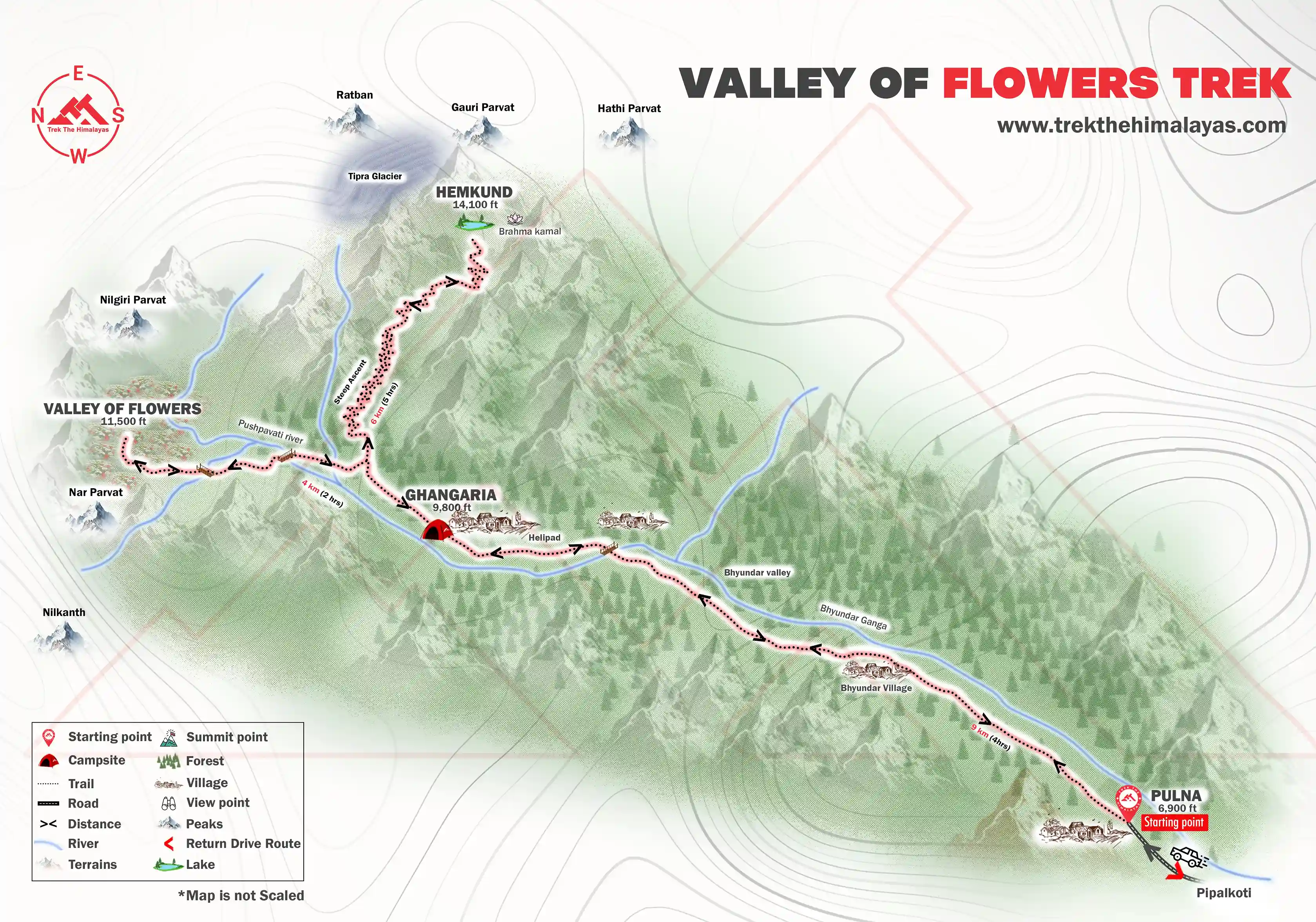
Valley of Flowers Trek Cost: Complete Guide

The Valley of Flowers trek is often described as India’s most colorful Himalayan journey. Nestled in Uttarakhand, this UNESCO-listed valley bursts into bloom every monsoon, covering the landscape with rare alpine flowers, waterfalls, and snow-fed streams.

Valley of flowers trek cost


If you’re planning this trek, understanding the real Valley of Flowers trek cost is just as important as knowing the trail. From transport and permits to food and guides, your total budget depends on how you plan the trek. This guide explains all cost elements in a simple and practical way.

Basic Trek Facts 

  • Valley of Flowers trek distance: Around 38–40 km (round trip)

  • Duration: 5–6 days

  • Max altitude: ~14,100 ft. (Hemkund Sahib)

  • Difficulty: Easy to Moderate

  • Region: Uttarakhand Himalayas

A properly planned Valley of Flowers trek itinerary keeps the walking hours balanced and helps control expenses.

What Is the Average Valley of Flowers Trek Cost?

The usual Valley of Flowers trek cost falls between:

₹10,000 to ₹16,000 per person

This range depends on:

  • Whether you go with a trekking company or independently

  • Quality of accommodation

  • Season of travel

  • Services included (meals, transport, guide, permits)

Luxury or fully supported packages may reach ₹18,000–₹20,000.


valley of flowers trek


Valley of Flowers Trek Cost – Category Wise

Instead of one big number, let’s divide the expenses into parts:

1. Travel Expenses

  • Haridwar/Rishikesh to Joshimath: ₹1,800 – ₹3,000

  • Joshimath to Govindghat (shared taxi/bus): ₹300 – ₹600

2. Stay Charges

  • Joshimath & Ghangaria guesthouses: ₹500 – ₹1,200 per night

  • Trek packages include tents and sleeping bags

3. Food & Water

  • Local meals: ₹250 – ₹400 per meal

  • Included in organized trek packages

4. Entry & Forest Fees

  • Valley of Flowers National Park entry: ₹150 – ₹200

  • Camera charges (if applicable): minimal

5. Guide & Support (Optional)

  • Local guide: ₹1,500 – ₹2,500

  • Porter: ₹800 – ₹1,200 per day

6. Gear & Clothing (If Rented)

  • Jacket, sleeping bag, trekking poles: ₹1,000 – ₹2,000

Valley of Flowers Trek Best Time (Cost Impact)

The Valley of Flowers trek best time is from July to September, but costs vary within this window:

  • July–August (peak bloom):
    Higher demand, slightly higher prices

  • September (late season):
    Fewer flowers but clearer skies and cheaper stays

June is for snow lovers, but the valley opens fully only after mid-June.

Valley of Flowers Trek Itinerary (Standard Route)

A common Valley of Flowers trek itinerary looks like this:

  • Day 1: Haridwar/Rishikesh → Joshimath

  • Day 2: Joshimath → Govindghat → Ghangaria

  • Day 3: Ghangaria → Valley of Flowers → Ghangaria

  • Day 4: Ghangaria → Hemkund Sahib → Ghangaria

  • Day 5: Ghangaria → Govindghat → Joshimath

  • Day 6: Return to Haridwar/Rishikesh

This route keeps the Valley of Flowers trek distance manageable and budget-friendly.


valley of flowers trek itinerary

Budget Trek vs Package Trek (Cost Comparison)

Self-Planned Trek

  • Lower cost

  • Requires planning transport, permits, and stays

  • Suitable for experienced travelers

Trek Package

  • Higher cost

  • Includes food, tents, permits, safety support

  • Best for first-time trekkers

Both options can fit within the typical Valley of Flowers trek cost range.

Why Do the Valley of Flowers Trek with Trek The Himalayas?

Choosing Trek The Himalayas for your Valley of Flowers trek adds safety and comfort without unexpected expenses:

  • Professionally trained trek leaders

  • Pre-planned Valley of Flowers trek itinerary

  • Oxygen support and medical kits

  • Quality meals and hygienic camps

  • Permits and transport managed for you

This means your Valley of Flowers trek cost covers essential services without hidden surprises.

Final Thoughts

The Valley of Flowers trek proves that Himalayan beauty does not always require a huge budget. With a moderate Valley of Flowers trek distance, a simple Valley of Flowers trek itinerary, and a short seasonal window, it offers incredible value for money.

By understanding the full Valley of Flowers trek cost, choosing the right season, and trekking with an experienced operator like Trek The Himalayas, you can enjoy one of India’s most magical landscapes without financial stress.

FAQs 

1. What is the total Valley of Flowers trek distance?
The total Valley of Flowers trek distance is about 38–40 km, including the return route.

2. What is the best time to visit Valley of Flowers?
The Valley of Flowers trek best time is from July to September, when flowers are in full bloom.

3. How much does the Valley of Flowers trek cost on average?
The average Valley of Flowers trek cost is between ₹10,000 and ₹16,000, depending on inclusions.

4. Is Valley of Flowers trek suitable for beginners?
Yes, due to its gentle trails and short daily walks, it is ideal for beginners.


Monday, 9 February 2026

How difficult is the Valley of Flowers trek?

 Valley of flowers trek is an easy to moderate difficulty trek, and can be done by beginners with a minimum fitness level. The path is not challenging, and there is no technical climbing. But walking every day and high altitudes can be exhausting and that is why a decent amount of stamina and acclimatization is key to comfortable trekking.

Friday, 30 January 2026

Buran Ghati Trek: Detailed Itinerary


The Buran Ghati Trek is a high-adventure trek known for its thrilling pass crossing and steep snow descent. The route takes trekkers through charming Himalayan villages, dense forests, and wide alpine meadows before reaching the snow-covered Buran Ghati Pass. The highlight of the trek is the dramatic descent from the pass, often done with ropes and snow slides, adding an element of mountaineering-style excitement. This trek offers a perfect balance of scenic beauty and technical challenge.

With Trek The Himalayas, the Buran Ghati Trek is conducted with technical expertise and strict safety measures in place. Professional trek leaders handle rope support, snow conditions, and group movement across the pass. Their experience ensures that trekkers can enjoy both the adventure and the breathtaking Himalayan views while staying safe throughout the journey.

Hampta Pass Trek: Detailed Itinerary


The Hampta Pass Trek is a unique journey that connects the lush Kullu Valley with the stark landscapes of Spiti. The trail moves through green meadows, river crossings, pine forests, and snow bridges before climbing to the high-altitude Hampta Pass. On crossing the pass, the scenery changes dramatically into cold desert terrain, creating a striking contrast within a short span of days. This variety of landscapes makes Hampta Pass one of the most visually exciting treks in Himachal Pradesh.

With Trek The Himalayas, the Hampta Pass Trek is carefully structured to handle both river crossings and high-altitude conditions safely. Trek leaders manage campsites, route timing, and acclimatization while offering constant guidance through challenging sections. Their organized support allows trekkers to enjoy the dramatic transition of landscapes with confidence and comfort.


Rupin Pass Trek: Detailed Itinerary


The Rupin Pass Trek is a spectacular crossover trek known for its constantly changing landscapes and adventurous route. The journey begins in green valleys and traditional villages, then climbs through forests, waterfalls, hanging hamlets, and snowy slopes. The dramatic final ascent to Rupin Pass involves a steep climb over snow and ice, making it one of the most exciting highlights of the trek. With every day offering a new type of scenery, Rupin Pass feels like multiple treks combined into one.

With Trek The Himalayas, the Rupin Pass Trek is organized with careful route planning and professional guidance across diverse terrains. The trek leaders ensure proper acclimatization and manage technical sections with precision and safety. Their experience allows trekkers to enjoy the thrill of the pass crossing while staying supported throughout this demanding and scenic adventure.


Pangarchulla Peak Trek: Detailed Itinerary


The Pangarchulla Trek is a challenging summit trek in Uttarakhand, famous for its steep ascents and dramatic high-altitude terrain. The trail moves through dense forests, open snowfields, and rocky ridges before reaching the summit, which offers sweeping views of Himalayan giants like Nanda Devi, Chaukhamba, and Kamet. The final climb is physically demanding and often snow-covered, making it one of the most thrilling summit attempts in the region. This trek is best suited for experienced trekkers seeking both adventure and achievement.

With Trek The Himalayas, the Pangarchulla Trek is carefully planned with strong emphasis on fitness preparation, acclimatization, and technical support. Expert trek leaders guide trekkers through difficult sections while maintaining strict safety protocols. Their structured approach helps trekkers tackle the demanding terrain confidently while enjoying the stunning mountain scenery throughout the journey.

Gaumukh Tapovan Trek: Detailed Itinerary


The Gaumukh Tapovan Trek is a remarkable high-altitude expedition that takes trekkers to the sacred origin of the River Ganga and onward to the vast alpine meadows of Tapovan, located at the base of towering Himalayan peaks. The journey passes the mighty Gaumukh Glacier, where the river emerges from an icy cave, and continues across rocky moraines and glacial terrain surrounded by dramatic landscapes. Along the way, trekkers are rewarded with close-up views of iconic summits such as Shivling, Bhagirathi, and Meru, making the route both spiritually meaningful and visually spectacular.

With Trek The Himalayas, the Gaumukh Tapovan Trek is carefully planned with a strong focus on safety, acclimatization, and responsible trekking practices. Expert trek leaders guide the group through challenging sections while sharing insights into the region’s spiritual heritage and mountain ecology. The well-structured itinerary, experienced support team, and attention to high-altitude safety make this trek a perfect blend of devotion, adventure, and breathtaking Himalayan scenery for seasoned trekkers seeking a truly profound mountain journey.


Har Ki Dun Trek: Detailed Itinerary


The Har Ki Dun Trek is a classic Himalayan valley trail that leads deep into the Garhwal Himalayas, passing through ancient villages, pine forests, and river valleys. Known as the “Valley of Gods,” this trek offers a mix of cultural charm and natural beauty with views of Swargarohini and surrounding peaks. The route follows steady climbs along the Tons River, opening into a wide cradle-shaped valley filled with alpine meadows and peaceful landscapes. It is a perfect blend of moderate adventure and scenic exploration.

With Trek The Himalayas, the Har Ki Dun Trek is designed to provide a safe and well-paced journey through remote terrain. Trained trek leaders manage acclimatization, campsite arrangements, and trail safety while sharing insights about local culture and mountain life. This organized approach allows trekkers to enjoy the journey without worry, making the experience both comfortable and deeply rewarding.

Valley of flowers Trek: Detailed Itinerary


The Valley of Flowers Trek is a breathtaking journey into a UNESCO World Heritage Site known for its vibrant alpine blooms and serene Himalayan setting. The trail winds through lush forests, flowing streams, and wide open meadows that come alive with hundreds of flower species during the monsoon season. Surrounded by snow-capped peaks and mist-covered slopes, the valley offers a peaceful and colorful trekking experience that feels almost unreal. The gentle gradients and scenic beauty make this trek ideal for nature lovers and first-time Himalayan trekkers.

With Trek The Himalayas, the Valley of Flowers Trek is thoughtfully organized with a focus on safety, acclimatization, and eco-friendly trekking practices. Experienced trek leaders guide trekkers through the trail while ensuring comfort and proper pacing throughout the journey. Their knowledge of the region adds depth to the experience, making this trek not just visually stunning but also culturally and environmentally enriching.

Wednesday, 28 January 2026

Valley of Flowers Trek: Detailed Itinerary, Cost & Best Time

 The Valley of Flowers Trek is one of the most scenic and refreshing Himalayan treks in India. Famous for its endless stretch of colorful alpine flowers, sparkling streams, and dramatic mountain backdrops, the Valley of Flowers is a UNESCO World Heritage Site located in Uttarakhand. Every monsoon, this hidden valley transforms into a natural garden filled with hundreds of species of wildflowers, making it a dream destination for trekkers, photographers, and nature lovers.

Valley of flowers

Unlike many high-altitude treks that focus on summits, the Valley of Flowers trek is about slow walking, soaking in views, and experiencing nature at its purest. It is also combined with a visit to Hemkund Sahib, adding a spiritual touch to this beautiful journey.

Overview of Valley of Flowers Trek

  • Region: Uttarakhand (Garhwal Himalayas)
  • Duration: 6 Days / 5 Nights
  • Maximum Altitude: 14,100 ft (approx.)
  • Difficulty Level: Easy to Moderate
  • Trek Distance: ~37 km (round trip)

The trek passes through forests of pine and birch, crosses wooden bridges over glacial rivers, and finally opens into a wide valley carpeted with flowers like blue poppy, brahma kamal, primula, anemone, and cobra lily. This makes the Valley of Flowers trek a perfect choice for first-time Himalayan trekkers.

Valley of Flowers Trek Best Time

The Valley of Flowers trek best time is from July to September. This is when the snow melts and the valley becomes accessible, revealing its famous floral diversity.

  • June: Snow patches remain on the trail. The valley looks fresh and green but has fewer flowers.
  • July & August: Peak blooming season with maximum flower varieties. Streams and waterfalls are also at their best.
  • September: Fewer flowers but clearer mountain views and fewer crowds.

Because this is a monsoon trek, trekkers should be prepared for rain, slippery trails, and misty views, which only add to the magical atmosphere of the Valley of Flowers.

Detailed Itinerary of Valley of Flowers Trek

Valley of flowers trek route


Day 1: Haridwar/Rishikesh to Joshimath (Drive)

Your journey begins with a scenic drive from Haridwar or Rishikesh to Joshimath. The road follows the Alaknanda and Bhagirathi rivers, passing through Devprayag, Rudraprayag, and Karnaprayag. Enjoy views of deep valleys, terraced fields, and small mountain towns. Reach Joshimath by evening, check into your hotel, and rest for acclimatization.

Day 2: Joshimath to Govindghat, Trek to Ghangaria

Drive from Joshimath to Govindghat, the starting point of the trek. From here, begin your gradual ascent to Ghangaria, the base village for both the Valley of Flowers trek and Hemkund Sahib. The trail runs alongside the Pushpawati River, crossing waterfalls and shaded forest sections. Reach Ghangaria by late afternoon and relax for the next day’s main trek.

Day 3: Ghangaria to Valley of Flowers and back

This is the most awaited day of the trek. Enter the Valley of Flowers, where the landscape opens into a vast meadow surrounded by snow-clad peaks. Walk through the valley, spotting different species of flowers, butterflies, and birds. Streams flow across the trail, and mist floats gently over the valley, creating a dreamlike setting. Spend a few hours exploring before returning to Ghangaria by evening.

Day 4: Ghangaria to Hemkund Sahib and back

Today involves a steep climb to Hemkund Sahib, one of the highest Gurudwaras in the world. The trail is challenging but rewarding, with panoramic views of surrounding peaks. At the top lies a serene glacial lake beside the shrine. After spending time here, descend back to Ghangaria for the night.

Day 5: Ghangaria to Govindghat, Drive to Joshimath

Descend from Ghangaria to Govindghat along the same trail, enjoying final views of waterfalls and forest paths. From Govindghat, drive back to Joshimath. This marks the end of the trekking portion of the Valley of Flowers trek.

Day 6: Joshimath to Haridwar/Rishikesh

Drive back to Haridwar or Rishikesh with unforgettable memories of the Valley of Flowers and Hemkund Sahib.

Valley of Flowers Trek Cost & Package

The Valley of Flowers trek cost generally ranges between ₹8,000 to ₹12,000, depending on the season and services included. A standard Valley of Flowers trek package usually covers:

  • Transportation from Haridwar/Rishikesh and back
  • Accommodation in guesthouses or camps
  • All meals during the trek
  • Forest permits and entry fees
  • Experienced trek leader and support staff

Prices may vary depending on group size, accommodation type, and additional services like mule or porter support.

Why Do the Valley of Flowers Trek with Trek The Himalayas?

Choosing Trek The Himalayas for your Valley of Flowers trek package ensures a well-organized and safe trekking experience. Their experienced trek leaders know the region well and help trekkers understand the local flora, terrain, and weather conditions. Trek The Himalayas follows eco-friendly trekking practices, ensuring the fragile ecosystem of the Valley of Flowers is protected.

With proper acclimatization schedules, nutritious meals, and on-ground support staff, Trek The Himalayas makes the Valley of Flowers trek suitable even for beginners. Their focus on safety, comfort, and responsible trekking allows you to enjoy the journey without worrying about logistics.

Valley of flowers trek best time

Things to Carry for Valley of Flowers Trek

  • Good quality trekking shoes with strong grip
  • Rain jacket or poncho
  • Warm layers and thermals
  • Trekking pole for steep sections
  • Cap, sunglasses, and sunscreen
  • Personal medicines and basic first-aid kit
  • Camera or phone to capture the valley’s beauty

FAQs

1. What is the Valley of Flowers trek best time?

The Valley of Flowers trek best time is from July to September when the valley is in full bloom and open for trekkers.

2. What is the average Valley of Flowers trek cost?

The Valley of Flowers trek cost usually ranges between ₹8,000 and ₹12,000, depending on the trekking company and inclusions.

3. Is the Valley of Flowers trek suitable for beginners?

Yes, the Valley of Flowers trek is suitable for beginners due to its moderate difficulty level, gradual ascent, and well-defined trails.

4. What does a Valley of Flowers trek package include?

A typical Valley of Flowers trek package includes transport, accommodation, meals, forest permits, and professional trek guides.

Thursday, 22 January 2026

How challenging is the Buran Ghati pass crossing?

 The Buran Ghati pass crossing is very challenging and recommended only for experienced trekkers. It involves steep ascents, high-altitude snowfields, slippery trails, and unpredictable weather, making it physically demanding. Proper fitness, acclimatization, and trekking experience are essential to safely complete the Buran Ghati trek.

How difficult is Rupin Pass trek?

 The Rupin Pass trek is considered moderately difficult. It involves long trekking days, river crossings, steep ascents, and high-altitude sections, making it a bit challenging for beginners. Trekkers with some prior experience and good fitness can enjoy the Rupin Pass trek while experiencing its stunning waterfalls, meadows, and snow-covered landscapes.

How difficult is the Gaumukh Tapovan trek?

 The Gaumukh Tapovan trek is moderately to highly difficult and is best suited for experienced trekkers. The route involves glacier crossings, high-altitude camping, and long trekking days, with steep ascents near Tapovan. Proper fitness, acclimatization, and trekking experience are essential to safely complete the Gaumukh Tapovan trek.

What is the height of Pangarchulla Peak?

 The Pangarchulla Peak stands at an altitude of approximately 3,680 meters (12,073 feet). This high-altitude summit offers trekkers panoramic views of Nanda Devi, Chaukhamba, Kamet, and surrounding Himalayan peaks, making the Pangarchulla Peak trek both challenging and rewarding.

Is Hampta Pass trek safe during monsoon?

 No, the Hampta Pass trek is not very safe during the monsoon. Heavy rains can cause slippery trails, swollen rivers, and landslides, making river crossings and steep sections risky. It’s recommended to attempt the Hampta Pass trek during summer (June to September) for safer and more stable conditions.

What is the best time to visit the Valley of Flowers Trek?

 The Valley of Flowers trek best time to visit is from July to September, when the alpine valley is in full bloom after the monsoon rains. This period offers the richest variety of flowers, lush greenery, and vibrant landscapes. If you’re planning your trip, these months are considered the best time to visit the Valley of Flowers trek for its peak natural beauty.

Thursday, 8 January 2026

Gaumukh Tapovan Trek: Detailed Itinerary


The Gaumukh Trek is a powerful journey to the sacred origin of the River Ganga, where the icy Gaumukh Glacier emerges from the heart of the Himalayas. This high-altitude trail blends spiritual significance with raw mountain adventure, passing through rugged terrain, glacial valleys, and dramatic landscapes dominated by peaks like Bhagirathi. Trekkers experience silence, scale, and history as they walk paths once taken by sages and mountaineers. The trek offers a deep connection with nature, making it both physically rewarding and spiritually uplifting.

Pangarchulla Peak Trek: Detailed Itinerary


The Pangarchulla Trek is one of Uttarakhand’s most demanding yet rewarding high-altitude adventures, ideal for experienced trekkers seeking a true challenge. Famous for its steep summit push and tough snow-covered sections, this trek tests endurance, skill, and determination. As you climb higher, the effort is rewarded with sweeping views of iconic Himalayan peaks like Nanda Devi, Chaukhamba, Kamet, and Hathi Ghoda. The raw terrain, changing weather, and exposed ridges add to the thrill, making Pangarchulla not just a trek, but a serious mountaineering-style achievement in the Himalayas.

Wednesday, 24 December 2025

Har Ki Dun Trek Cost: Complete Guide

 The Har Ki Dun trek is one of the most popular valley treks in the Garhwal Himalayas, loved for its gradual trails, ancient villages, and stunning mountain views. Before planning this trek, most trekkers want clarity on the Har Ki Dun trek cost—what the price includes, what extra expenses to expect, and how much budget to keep aside.

har ki dun trek

This complete guide explains the Har Ki Dun cost, Har Ki Dun price breakup, inclusions, exclusions, and budget tips to help you plan better.

Har Ki Dun Trek Cost Overview

The average Har Ki Dun trek cost ranges between:

₹13,000 to ₹18,000 per person

The final Har Ki Dun price depends on the season, itinerary length, inclusions, and trek operator.

What Is Included in Har Ki Dun Trek Cost?

Most standard Har Ki Dun trek packages include:

  • Accommodation during the trek (guesthouse & tents)

  • All meals from Day 1 dinner to Day 6 breakfast

  • Trek permits and forest entry fees

  • Experienced trek leaders and local guides

  • Support staff (cook, helpers)

  • Common camping equipment (tents, sleeping bags, mats)

  • Basic medical kit and safety equipment

Trekking with experienced organizations like Trek The Himalayas ensures safety, proper acclimatization, and smooth logistics.

What Is Not Included in Har Ki Dun Price?

The Har Ki Dun trek cost usually does not include:

  • Travel to and from Dehradun

  • Personal expenses (snacks, bottled drinks, tips)

  • Trekking gear rental (shoes, jackets, poles)

  • Insurance or emergency evacuation costs

Har Ki Dun Trek Cost Breakdown (Estimated)

har ki dun trek cost


  • Trek Package: ₹13,000 – ₹18,000

  • Transport (Dehradun–Sankri–Dehradun): ₹1,500 – ₹2,500

  • Gear Rentals: ₹1,000 – ₹2,000

  • Personal Expenses: ₹500 – ₹1,000

Estimated Total Budget: ₹16,000 – ₹22,000

Har Ki Dun Distance vs Cost Value

With a Har Ki Dun distance of approximately 44 km, the trek offers excellent value for money. The long valley walk, multiple campsites, cultural villages, and scenic landscapes justify the overall trek cost.

Season-Wise Har Ki Dun Trek Cost Variation

Summer (March – June)

  • Pleasant weather

  • Higher demand

  • Slightly higher Har Ki Dun price

Autumn & Winter (September – December)

  • Snow views

  • Fewer trekkers

  • Sometimes lower trek cost

Is Har Ki Dun Trek Worth the Cost?

Yes. The Har Ki Dun trek cost is reasonable considering:

  • Long trek duration (7 days)

  • Remote Himalayan terrain

  • Rich cultural experience

  • Professional support and safety

It’s an ideal trek for beginners looking for a complete Himalayan experience without extreme difficulty.

har ki dun trek distance

Budget Tips to Reduce Har Ki Dun Trek Cost

  • Book early to get lower prices

  • Travel in groups

  • Rent gear instead of buying

  • Avoid peak holiday dates

Why Choose Trek The Himalayas for Har Ki Dun?

Trek The Himalayas is known for experienced guides, strong safety standards, well-planned itineraries, and reliable logistics—making your Har Ki Dun trek comfortable and secure.

Final Thoughts

The Har Ki Dun trek cost is well-balanced for what the trek offers—beautiful valley trails, cultural villages, snow views, and a relaxed trekking pace. With proper planning and a reliable trek operator, it becomes a memorable and value-for-money Himalayan adventure.

FAQs 

1. What is the average Har Ki Dun trek cost?

The average Har Ki Dun trek cost ranges between ₹13,000 and ₹18,000, depending on the season and inclusions.

2. Does the Har Ki Dun price include transport from Dehradun?

Some trek packages include transport from Dehradun to Sankri and back, while others charge separately. Always confirm this before booking.

3. Is the Har Ki Dun trek cost higher in winter?

Winter treks may include extra safety gear and support, which can slightly increase the Har Ki Dun price, but overall costs remain reasonable.

4. Is Har Ki Dun trek worth the cost for beginners?

Yes, the Har Ki Dun trek offers excellent value for beginners due to its gradual trails, scenic beauty, and professional support.

Tuesday, 23 December 2025

Goechala trek: Detailed Itinerary


The Goechala Trek is one of the most iconic high-altitude treks in the Eastern Himalayas, known for its close-up views of Mount Kanchenjunga. The trail begins in dense forests of rhododendron and magnolia, gradually opening into wide alpine meadows and glacial valleys. As you move higher, the landscapes become more dramatic, with icy rivers, high mountain lakes, and sweeping ridgelines. Reaching Goechala View Point at sunrise is a highlight, offering breathtaking views of Kanchenjunga and surrounding peaks. With its mix of challenging terrain, rich biodiversity, and rewarding panoramas, the Goechala Trek is ideal for trekkers seeking both adventure and deep Himalayan beauty.


Hampta Pass Trek: Detailed Itinerary


The Hampta Pass Trek is one of the most dramatic crossover treks in the Indian Himalayas, offering a striking contrast of landscapes in a short span of time. Starting from the lush green valleys of Kullu, the trail winds through pine forests, open meadows, and glacial streams before climbing steadily toward the high-altitude Hampta Pass. As you cross the pass, the scenery shifts suddenly to the stark, rocky terrain of Lahaul, creating a memorable visual transition. Snow patches, river crossings, and panoramic mountain views make the journey adventurous yet approachable. With its manageable duration and diverse terrain, the Hampta Pass Trek is perfect for trekkers seeking variety, challenge, and unforgettable Himalayan scenery.


Har Ki Dun Trek: Detailed Itinerary


The Har Ki Dun Trek is one of Uttarakhand’s most rewarding valley treks, offering a rare blend of scenic beauty, cultural heritage, and gentle adventure. Tucked deep in the Garhwal Himalayas, the trail passes through dense pine forests, riverside paths, and ancient villages like Osla, where traditional wooden houses and local customs still thrive. As the trek opens into the wide Har Ki Dun valley, trekkers are greeted with sweeping views of towering peaks such as Swargarohini and Black Peak. With its gradual climbs, peaceful surroundings, and rich Himalayan charm, Har Ki Dun is ideal for those who want an immersive mountain experience without extreme difficulty.

Thursday, 18 December 2025

Hampta Pass Trek Price: Complete Guide

 The Hampta Pass Trek is one of the most popular crossover treks in Himachal Pradesh, known for its dramatic landscape changes--from lush green valleys of Kullu to the stark cold desert of Lahaul. Because of its short duration, snow crossings, and high-altitude pass experience, many trekkers want to know one thing before planning: what is the actual Hampta Pass trek price?

hampta pass trek


This complete guide breaks down the trek price in detail, including package cost, transport, rentals, seasonal variations, and hidden expenses, so you can plan your budget confidently.

Average Hampta Pass Trek Price

For most trekkers, the total Hampta Pass trek price usually falls between:

  • 11,000 - 17,000 per person

The final amount depends on the season, inclusions, whether Chandratal Lake is added, and personal choices like gear rentals.

Hampta Pass Trek Package Price

The biggest portion of your budget is the trek package price.

Typical Package Price

  • 9,000 - 13,000 per person (Ex-Manali)

What Is Included in the Trek Package Price

  • Most standard Hampta Pass trek packages include:
  • Accommodation (Manali guesthouse + campsite tents)
  • All meals during the trek
  • Experienced trek leader and local guides
  • Camping equipment (tents, sleeping bags, mats)
  • Trek permits and forest entry fees
  • Basic medical and safety support

For the experience offered, the Hampta Pass trek price is considered very reasonable.

Transport Cost (Manali - Jobra - Chatru - Manali)

Transport is usually not included in the base trek price.

  • Shared vehicle: 1,500 - 2,500 per person
  • Private vehicle: Higher, depending on group size

If Chandratal Lake is included, transport cost may increase slightly due to road conditions.

Gear Rental Cost

If you don't already own trekking gear, rentals are the most budget-friendly option.

Average Gear Rental Prices

  • Trekking shoes: 400 - 600
  • Down jacket: 300 - 500
  • Rain jacket / poncho: 150 - 300
  • Trekking pole: 100 - 200
  •  Total rental cost: 1,000 - 2,000

Personal & Miscellaneous Expenses

These include snacks, bottled water, charging fees, and tips.

  • 500 - 800

Estimated Total Hampta Pass Trek Price

When all expenses are combined:

  • Budget range: 11,000 - 13,000
  • Comfort range: 14,000 - 17,000

This includes trek package, transport, rentals, and personal expenses.

Season-Wise Trek Price Variation

Hampta Pass Trek Cost


June - Early July

  • More snow near the pass
  • Slightly higher logistics cost
  • High demand season

Late July - September

  • Stable trek price
  • Lush green landscapes
  • Less snow but beautiful river crossings

What Is NOT Included in the Trek Price

  • Travel to Manali (train/flight)
  • Backpack offloading charges
  • Travel insurance
  • Emergency evacuation
  • Extra hotel stay in Manali

Is the Hampta Pass Trek Price Worth It?

Absolutely. For its price, Hampta Pass offers:

  • A high-altitude pass crossing (14,100 ft)
  • Snowfields even in summer
  • River crossings and glaciers
  • A rare Kullu-Lahaul crossover experience

Few treks in India offer this much variety at this cost.

Tips to Reduce Hampta Pass Trek Price

  • Rent gear instead of buying
  • Choose shared transport
  • Avoid long weekends
  • Carry personal snacks
  • These small choices can save you 1,000-2,000 easily.

Final Thoughts

The Hampta Pass trek price is highly justified considering the landscapes, adventure level, and experience packed into just a few days. With proper planning and realistic budgeting, this trek is accessible even for first-time trekkers.

FAQs

1. What is the average Hampta Pass trek price?

The average Hampta Pass trek price ranges between 11,000 and 17,000 per person, depending on inclusions and season.

2. Is Chandratal Lake included in the Hampta Pass trek price?

Chandratal Lake is usually optional and may cost extra depending on road and weather conditions.

3. Does the Hampta Pass trek price increase during peak season?

Yes, during June and early July, prices may increase slightly due to snow conditions and higher demand.

4. Is the Hampta Pass trek price suitable for beginners?

Yes. Despite being a moderate trek, the Hampta Pass trek offers excellent value for beginners looking for a high-altitude Himalayan experience.

Bali Pass Trek 2026: Complete Guide to Route, Cost, Best Time, Weather & Itinerar

Bali Pass Trek 2026 Guide | Best Time, Cost, Route, Weather & Complete Itinerary The Bali Pass Trek is a spectacular high-altitude Hima...